




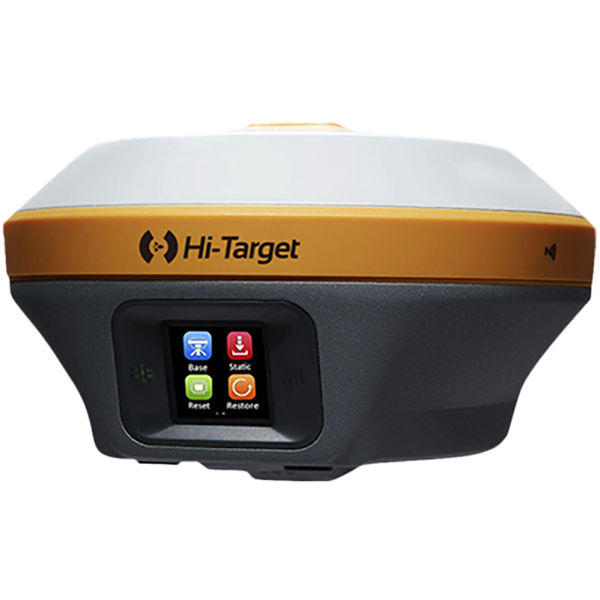
Modern farming is rapidly evolving with the help of advanced positioning technologies. One of the most impactful innovations is the Best Applications of a GNSS rtk receiver in Modern Agriculture, which has transformed how farmers manage land, crops, and machinery with centimeter-level accuracy.
This technology is no longer limited to large-scale industrial farms; it is increasingly being adopted across all types of agricultural operations to improve efficiency, reduce waste, and maximize yields.
Understanding GNSS RTK Technology in Agriculture
GNSS (Global Navigation Satellite System) combined with RTK (Real-Time Kinematic) correction provides highly accurate positioning data in real time. Unlike standard GPS, RTK systems use a base station and rover setup to correct satellite errors instantly, delivering precision up to 1–2 centimeters.
The Best Applications of a GNSS RTK Receiver in Modern Agriculture rely on this extreme accuracy to support tasks that require exact positioning, such as planting, spraying, and field mapping.
Precision Planting and Seeding
One of the most important uses of RTK technology is precision planting. Farmers can ensure that seeds are placed at exact intervals and depths, reducing overlap and gaps in the field.
With the Best Applications of a GNSS RTK Receiver in Modern Agriculture, planting machinery can follow perfectly straight lines even in low visibility conditions such as fog, dust, or nighttime operations. This leads to better crop uniformity and improved yields.
Automated and Guided Machinery
Modern tractors, harvesters, and sprayers are increasingly equipped with autonomous or semi-autonomous systems that rely on RTK signals. These machines can operate with minimal human intervention while maintaining high accuracy.
The Best Applications of a GNSS RTK Receiver in Modern Agriculture in automation include auto-steering, reduced operator fatigue, and optimized field coverage without overlaps or missed sections.
Efficient Fertilizer and Pesticide Application
Over-application of fertilizers and pesticides can increase costs and harm the environment. RTK-guided systems allow farmers to apply inputs only where needed.
By using the Best Applications of a GNSS RTK Receiver in Modern Agriculture, farmers can map field variability and ensure precise application rates, reducing chemical usage while improving crop health.
Field Mapping and Boundary Management
Accurate field mapping is essential for modern farm management. GNSS RTK receivers help farmers create detailed digital maps of their land, including boundaries, soil variations, and irrigation zones.
The Best Applications of a GNSS RTK Receiver in Modern Agriculture also include long-term land management planning, ensuring that every part of the field is used efficiently and accurately recorded for future reference.
Irrigation Planning and Water Management
Water is one of the most critical resources in agriculture. RTK technology helps design efficient irrigation systems by providing precise elevation and terrain data.
With the Best Applications of a GNSS RTK Receiver in Modern Agriculture, farmers can optimize water flow, prevent flooding, and ensure even distribution across fields, leading to healthier crops and reduced water waste.
Harvest Optimization and Yield Tracking
During harvest, RTK systems help machinery navigate fields efficiently, minimizing crop loss and improving collection speed. Additionally, yield mapping allows farmers to analyze productivity across different zones.
The Best Applications of a GNSS RTK Receiver in Modern Agriculture support data-driven decision-making, helping farmers identify high- and low-performing areas and adjust future strategies accordingly.
Conclusion
As agriculture becomes increasingly data-driven, precision tools are essential for sustainable and profitable farming. The Best Applications of a GNSS RTK Receiver in Modern Agriculture demonstrate how advanced positioning technology improves nearly every stage of farming—from planting to harvesting.
